Guide · 6 minute read
Asset register format: the columns to keep, with a template
Updated
The short answer
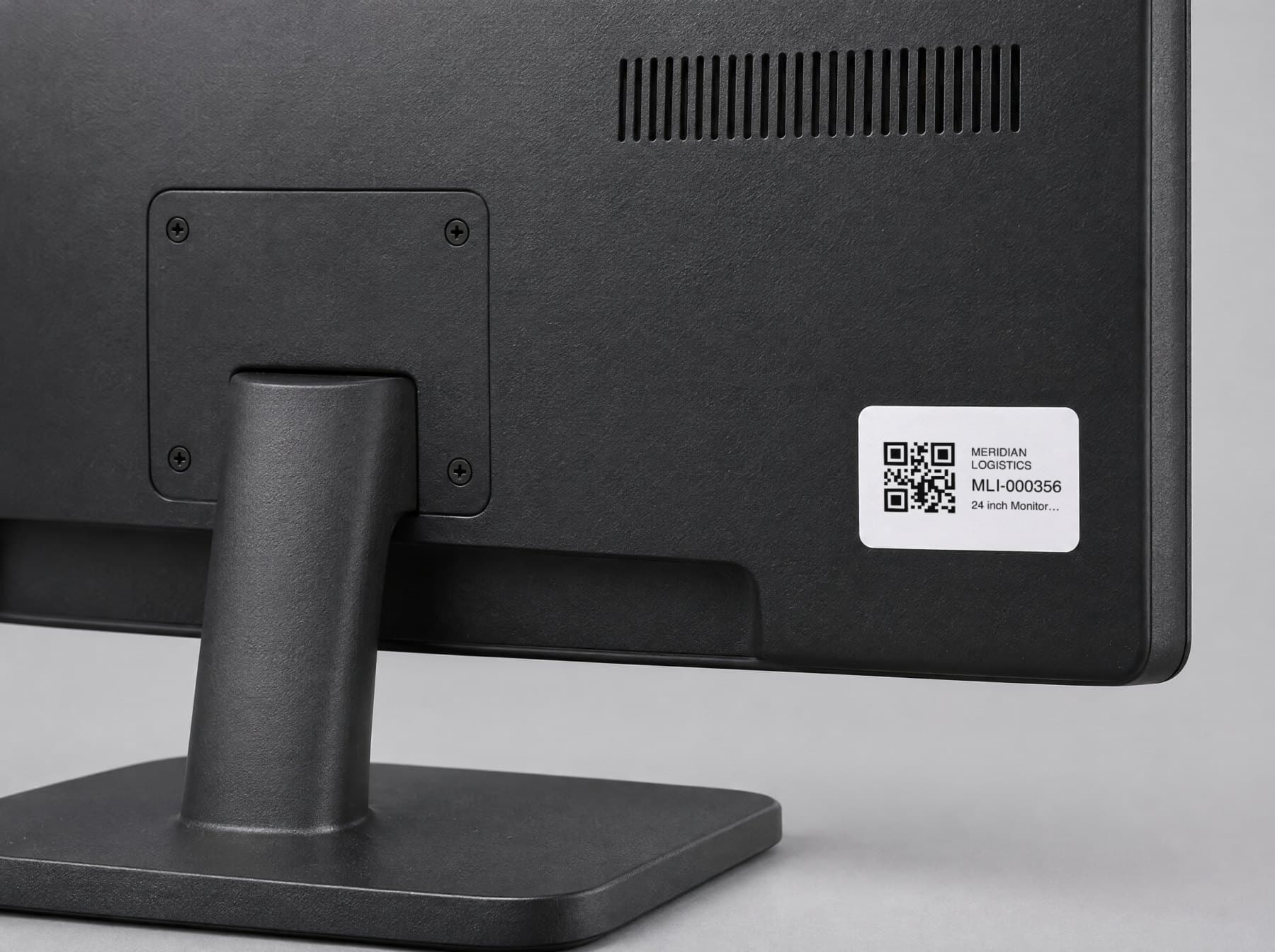
A workable asset register has one row per asset and these columns: asset tag, name, category, IT or non-IT, status, location, holder, serial number, brand, model, purchase date, purchase cost and warranty end date. The tag is the one column that must be unique and must never change.
An asset register is a table with one row per asset. The format matters less than two rules: every asset has a unique tag that never changes, and every column holds one kind of value. A register that follows both can be imported into any system. One that does not will fight you every time.
The columns
| Column | Required | What goes in it | Example |
|---|---|---|---|
| Asset tag | Yes, and unique | Your prefix and a running number | AST-000123 |
| Name | Yes | What people call it | ThinkPad T14 Gen 4 |
| Category | Recommended | A group you define | Laptops |
| IT or non-IT | Recommended | Which team looks after it | IT |
| Status | Recommended | In use, in stock, in repair, retired or missing | In use |
| Location | Recommended | A place a person can walk to | Head Office · 2nd Floor |
| Holder | For assigned assets | The person it was handed to | Priya Nair |
| Serial number | For devices | As printed on the device | PF4XK21M |
| Brand | Optional | Manufacturer | Lenovo |
| Model | Optional | Model name or number | 21HD004VIG |
| Purchase date | For the books | One format throughout | 14/06/2025 |
| Purchase cost | For the books | A number, no currency symbol | 112000 |
| Warranty until | Optional | One format throughout | 13/06/2028 |
A notes column at the end is useful for anything that does not fit. Resist adding more columns until someone has asked for the same information three times.
Download the template
Download the asset register template (CSV). It opens in Excel and Google Sheets and includes four example rows to overwrite. It has every column above except the asset tag, because a tagging system assigns tags in order when the file is imported. It imports directly into our register.
Example rows
| Asset tag | Name | Category | IT or non-IT | Status | Location | Holder |
|---|---|---|---|---|---|---|
| AST-000123 | ThinkPad T14 Gen 4 | Laptops | IT | In use | Head Office · 2nd Floor | Priya Nair |
| AST-000124 | 24 inch Monitor P2422H | Monitors | IT | In use | Head Office · 2nd Floor | Priya Nair |
| AST-000125 | Ergonomic Task Chair | Office Chairs | Non-IT | In use | Head Office · 2nd Floor | |
| AST-000126 | Split AC 1.5 Ton Inverter | Air Conditioners | Non-IT | In repair | Head Office · Meeting Room 1 |
Furniture usually has no holder. It belongs to a place.
Rules that keep a register usable
One row per asset, not per purchase. An invoice for 40 chairs is 40 rows. A row that says "Chairs × 40" cannot be tagged, located or counted.
The tag is permanent. It is assigned once and never reused, even after the asset is retired. Reusing numbers makes history meaningless.
Use fixed lists for status, category and location. "In Use", "in use", "Active" and "working" are four statuses to a computer. Pick one spelling and keep to it.
One date format. DD/MM/YYYY is usual in India. Mixed formats are the most common reason an import fails, and 03/04/2025 means different days to different people.
Costs as plain numbers. 112000, not ₹1,12,000/-. Formatting is for display.
Locations a person can walk to. "Mumbai" is too broad to count. "Mumbai HQ · 3rd Floor" can be walked in an afternoon.
Retire, do not delete. A sold or scrapped asset changes status to retired. Its row and its history stay.
Statuses that cover everything
Five statuses are enough for most companies.
| Status | Meaning |
|---|---|
| In use | Deployed, with a person or in a place |
| In stock | Working and waiting to be issued |
| In repair | With a vendor or the service desk |
| Retired | Sold, scrapped or written off. Kept for the record. |
| Missing | Looked for and not found |
"Missing" is different from "not counted yet". Mark an asset missing only after someone has looked.
What an auditor expects to see
For companies in India, clause 3(i)(a) of the Companies (Auditor's Report) Order, 2020 asks whether the company maintains proper records showing full particulars, including quantitative details and situation, of property, plant and equipment. In register terms:
- Full particulars: what the asset is, with enough detail to identify it.
- Quantitative details: one row per asset, so the count is the number of rows.
- Situation: where it is.
A register with the columns above, kept current, covers identity, quantity and location.
The accounting side needs more. The ICAI's guidance on the Order, as summarised by KPMG, expects the records to include at least:
- the year of purchase and the original cost;
- the useful life and a component-wise break-up;
- any revaluation or other change in cost;
- accumulated depreciation.
The totals should reconcile with the books of account. The records should also cover assets that are fully depreciated, impaired, or retired and held for disposal.
Most companies keep depreciation in their accounting system and keep identity, holder and location in the asset register. The asset tag links the two. Put the same tag number against the asset in both, and either record can be traced to the other. The Order speaks of proper records. It does not name a "fixed asset register", and this pair of records is the usual way to meet it.
Our guide to physical verification of fixed assets covers the second thing auditors ask about: whether someone has checked.
Moving from a spreadsheet to a system
A spreadsheet works until two people edit it, or until someone needs to know who changed a row. When that happens:
- Clean the sheet using the rules above. This is the real work.
- Import it. A good import shows you which rows fail and why, and changes nothing until every row is valid.
- Print a label for each row and tag the assets.
- Stop editing the sheet. Keep one source of truth.
Sources
- Companies (Auditor's Report) Order, 2020: clause text, a document hosted by the Institute of Chartered Accountants of India.
- CARO 2020: enhanced reporting, KPMG in India, March 2022. It summarises the ICAI guidance on what the records should hold.