Guide · 8 minute read
Physical verification of fixed assets, step by step
Updated
The short answer
A physical verification of fixed assets checks that each asset in the register exists and that each asset on the floor is in the register. Fix the scope and cut-off date, count location by location, record who saw each asset and when, reconcile what was not found, and deal with the differences in the books with proper approval.
A physical verification answers one question: do the assets in the books exist? It is simple to describe and tedious to do, which is why it is often rushed in the last week of the year. This guide sets out a method that produces a result an auditor will accept, and that gets easier each time.
What the rules ask for in India
Under the Companies (Auditor's Report) Order, 2020 (CARO 2020), the auditor's report covers the company's property, plant and equipment. Clause 3(i) asks, among other things:
- Clause 3(i)(a)(A): whether the company is maintaining proper records showing full particulars, including quantitative details and situation, of property, plant and equipment;
- Clause 3(i)(b): whether these have been physically verified by the management at reasonable intervals, whether any material discrepancies were noticed on such verification and, if so, whether they have been properly dealt with in the books of account.
Four points follow.
- Management does the verification. The auditor reports on whether you did it, and may test it. It is your count.
- "Reasonable intervals" has a working benchmark. The Order sets no number. The ICAI's guidance note on the Order, as summarised by KPMG, treats a count once a year as reasonable. Where counting everything each year is impracticable, the programme should still cover every asset at least once in three years, and the auditor will report that not all assets were verified during the year. Agree your approach with your auditor and record it as policy.
- Discrepancies must be dealt with. Finding a difference is not the failure. Leaving it unresolved is.
- The Order does not ask for tags. It asks for records and a count. Tags are what make the count quick and the result checkable.
Who the Order applies to
CARO 2020 applies to most companies, for financial years starting on or after 1 April 2021. It does not apply to banking companies, insurance companies, section 8 companies, one person companies or small companies. A private company is also outside it if it is not a subsidiary or holding company of a public company and stays within all three of these limits:
| Limit | Not more than |
|---|---|
| Paid-up capital plus reserves and surplus, at the balance sheet date | ₹1 crore |
| Borrowings from banks and financial institutions, at any point in the year | ₹1 crore |
| Total revenue for the year | ₹10 crore |
A company outside the Order still gains from a count. Lenders, insurers and buyers ask the same questions.
Counts that do not happen
A skipped verification is common enough to be reported. The Comptroller and Auditor General's Audit Report No. 9 of 2026 records that physical verification of fixed assets was not conducted at 132 central autonomous bodies for 2022-23. The C&AG was to audit the accounts of 479 such bodies that year.
This is a summary, not advice. Read the Order and speak to your auditor about how it applies to your company.
The two directions of a count
A complete verification checks both ways.
| Direction | Start from | Check | Finds |
|---|---|---|---|
| Book to floor | Each row in the register | That the asset exists where the register says | Assets that are missing |
| Floor to book | Each asset you can see | That it is in the register | Assets that were never recorded |
Most teams do only the first. The second is how you find the 30 monitors bought on a credit card and never capitalised.
Before the count
1. Fix the scope and the cut-off date. Which locations, which categories, and as at what date. Purchases and disposals after the cut-off are handled separately.
2. Clean the register. One row per asset, each with a unique tag and a location. If the register lists "Chairs × 40", split it first. See asset register format.
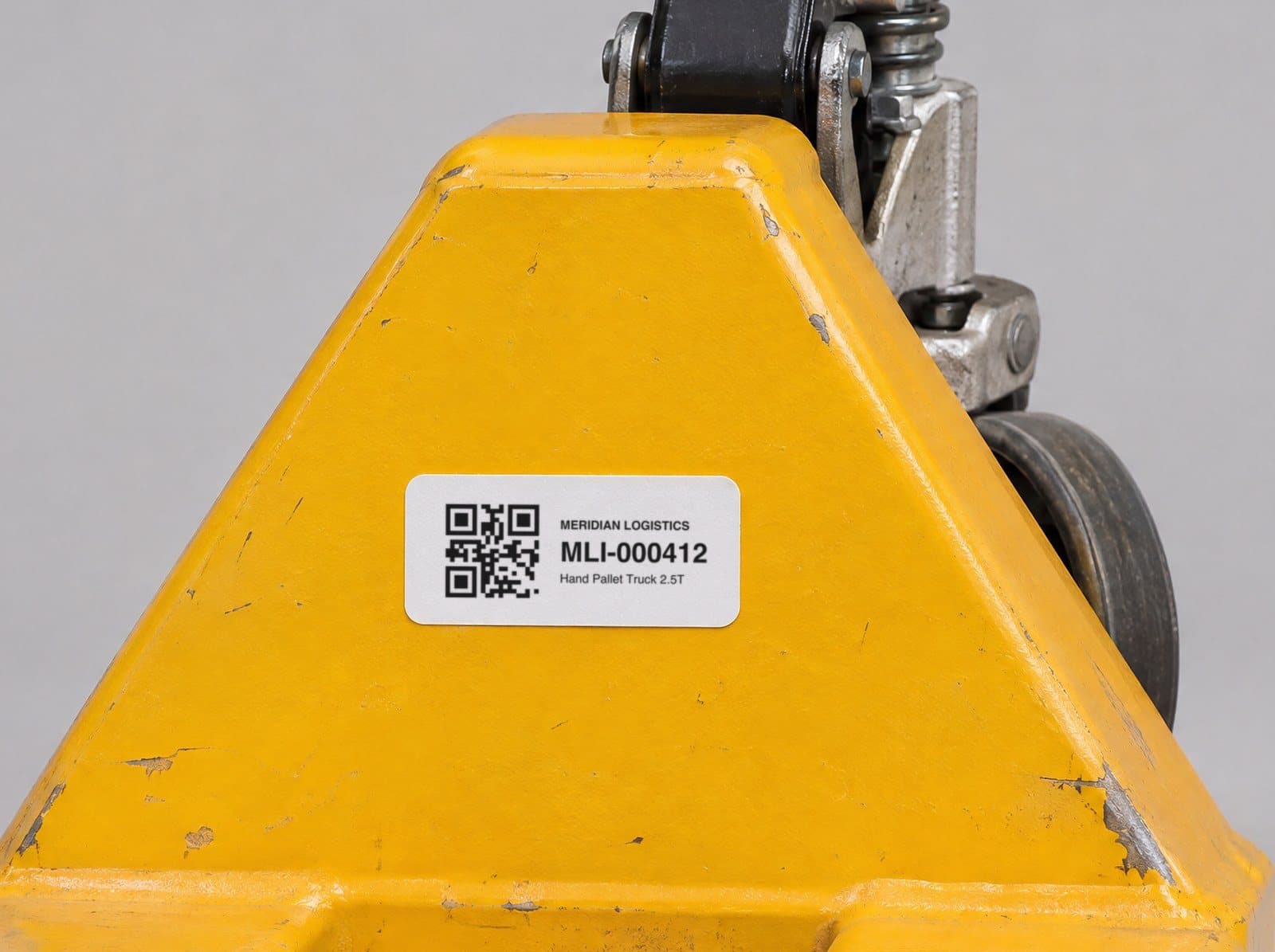
3. Tag what is not tagged. A count without tags relies on matching descriptions and serial numbers by eye, which is slow and arguable. See how to tag assets.
4. Split the work by location. One count per floor or site, each small enough to finish in a day.
5. Brief the counters. Who counts where, how to record an asset with no tag, and who to call about something that looks wrong. Where practical, the person counting an area should not be the person responsible for the assets in it.
During the count
- Work systematically through the space. Room by room, clockwise, top to bottom. Random wandering misses things.
- Scan, do not tick. A scan records the asset, the person and the time. A tick on a printed list records nothing you can check later.
- Record what you see, not what you expect. If the asset is damaged or unused, note it. That is useful to finance.
- Capture untagged assets on the spot. Description, serial number, location and a photo if possible. They are your floor-to-book findings.
- Do not chase during the count. Finish the area, then chase what is left.
After the count: reconcile
You now have three lists.
| List | Meaning | First step |
|---|---|---|
| Found | In the register and seen | None. Keep the record of who saw it and when. |
| Not found | In the register, not seen | Check the last known holder and location. Look for transfers, repairs and disposals that were not recorded. |
| Found, not in the register | Seen, with no record | Find the purchase. Decide whether it should be capitalised, and add it. |
Work the not-found list in order of value. Most entries resolve into one of five explanations:
- It is in another location and was never updated.
- It is with a person who was not on site.
- It is out for repair.
- It was sold, scrapped or returned and the register was not updated.
- It is gone.
Only the fifth is a loss. The first four are record-keeping, and fixing them is what makes next year's count shorter.
Deal with the differences
For each unresolved item, document what was done to find it and who approved the conclusion. Then:
- Missing assets: write off through your normal approval process, with the supporting note.
- Unrecorded assets: capitalise or expense according to policy, and tag them.
- Wrong location or holder: correct the register.
- Damaged or idle assets: flag for repair, redeployment or impairment review.
Changes to the books should be made by someone with authority, not by the count itself. A count reports. A person decides.
What to keep on file
- The scope, cut-off date and counting instructions.
- The list of assets expected, as it stood when the count began.
- The result: found and not found, with the counter and time for each asset found.
- The floor-to-book findings.
- The reconciliation and the approvals for write-offs and additions.
Keep the count result in a form that cannot be quietly edited afterwards. An export taken when the count closes, stored with the year's working papers, does this.
If you are counting on paper or in a spreadsheet, start from our physical verification report template (CSV). It has one row per asset, with columns for the result, the counter, the date, the condition and the follow-up.
Make the next one easier
- Count in cycles. One location a month covers a twelve-site company in a year, with no year-end scramble.
- Update at the moment of change. A register that is corrected when a laptop changes hands has little to reconcile.
- Count high-value and portable assets more often. Laptops and phones drift fastest.
- Review the not-found list from last time. If the same assets are missing twice, write them off.
A one-page checklist
| Stage | Done when |
|---|---|
| Scope and cut-off agreed | Written down and shared with the auditor |
| Register cleaned | One row per asset, each with a tag and a location |
| Assets tagged | Every asset in scope carries a label |
| Counts planned | One per location, with named counters |
| Counts completed | Each closed, with found and not-found lists |
| Floor-to-book done | Untagged assets listed |
| Reconciled | Each not-found item explained or escalated |
| Books adjusted | Write-offs and additions approved and posted |
| Filed | Results and approvals stored with working papers |
Sources
- Companies (Auditor's Report) Order, 2020: clause text and exempt companies, a document hosted by the Institute of Chartered Accountants of India.
- CARO 2020: enhanced reporting, KPMG in India, March 2022. It summarises the ICAI guidance on what the records should hold and how often to verify.
- Press brief on Audit Report No. 9 of 2026, Comptroller and Auditor General of India, 12 August 2026.