Guide · 6 minute read
Asset tag labels: polyester, vinyl or tamper-evident?
Updated
The short answer
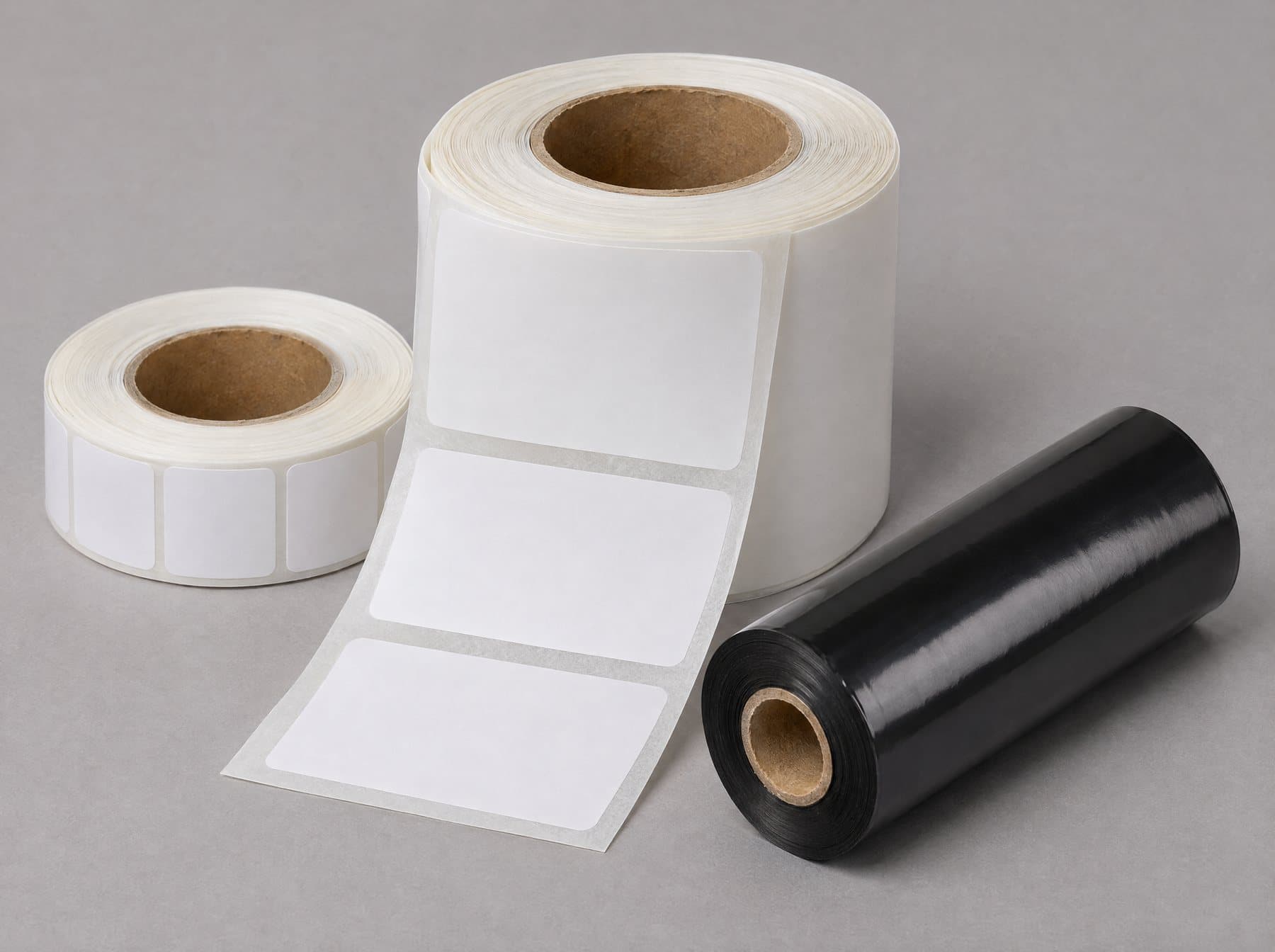
Use matt white polyester labels with a permanent adhesive for most indoor assets, and tamper-evident polyester for laptops and phones. Print them by thermal transfer with a resin or wax-resin ribbon. Avoid paper labels and direct thermal printing, which wear out or fade within months.
The label is the cheapest part of an asset tagging project and the part most likely to fail. A paper label on a warm laptop lid lifts within months. Once labels start falling off, people stop trusting the register. Spend the extra on material.
The materials
| Material | What it is | Lasts | Best for | Avoid for |
|---|---|---|---|---|
| Paper | Coated paper with adhesive | Months | Trials, short projects, cartons | Anything meant to stay tagged |
| Polyester (PET) | Tough plastic film, usually matt white or silver | Years indoors | Laptops, monitors, furniture, appliances | Sharply curved surfaces |
| Vinyl | Softer, flexible plastic film | Years, including outdoors | Curved or uneven surfaces, outdoor equipment | Places where it could be peeled and moved |
| Tamper-evident (VOID) polyester | Polyester that leaves a pattern or the word VOID behind when peeled | Years | Laptops, phones, anything that might be re-labelled | Assets you expect to re-tag often |
| Destructible vinyl | Brittle film that breaks into fragments when peeled | Years | High-value items where a moved label must be impossible | Rough handling, which chips it |
| Metal (anodised aluminium) | A thin plate, glued or riveted | Many years, indoors and out | Plant, machinery, outdoor and high-heat equipment | Office assets, where it is overkill |
For an office, the short version is: polyester for almost everything, tamper-evident polyester for portable devices.
Polyester: the default
Polyester film does not tear, shrink or absorb moisture, and it stands up to cleaning fluids and the heat of electronics. With the right ribbon, the print is fused to the surface and survives rubbing.
Choose matt white for the best contrast behind a QR code. Silver looks smart and reflects light, which can make scanning harder under office lighting.
Tamper-evident labels
Two kinds, for two purposes.
VOID labels come away in one piece but leave a mark on the asset and show a pattern on the label. You can see that someone removed it. Use them where the worry is a label being quietly swapped between devices.
Destructible labels cannot be removed in one piece at all. They break up. Use them where the worry is the label being moved to another asset.
Both make re-tagging slower, because the old label has to be scraped off. That is the point, but do not put them on assets you re-label often.
The printing method matters as much as the material
| Method | How it works | Print life | Use for asset tags |
|---|---|---|---|
| Thermal transfer | Heat melts ink from a ribbon onto the label | Years. Resists light, heat and rubbing, especially with a resin ribbon | Yes |
| Direct thermal | Heat darkens a coated label. No ribbon | Months. Fades with heat and sunlight | No. Made for shipping labels |
| Office laser printer on label sheets | Toner fused to the sheet | Good on polyester sheets rated for laser printers | Yes, for a few hundred labels |
| Inkjet | Liquid ink on the sheet | Smears unless the sheet is made for it | Only with inkjet-rated waterproof sheets |
If a label printer has no ribbon, it is direct thermal, and the print will fade. For asset tags, use thermal transfer with a ribbon matched to the label: wax-resin or resin for polyester.
Zebra's label selection guide draws the same line. It suggests a direct thermal paper label where the print only has to stay readable for about six months and will not meet chemicals, moisture or abrasion. For an item kept outdoors for more than three years, it calls for a thermal transfer synthetic label.
Adhesive and surface
A good label on a bad surface still falls off.
- Clean first. Wipe off dust, oil and polish. Let the surface dry.
- Flat and smooth holds best. Textured plastic and powder-coated metal give the adhesive less to grip. Press the label down firmly across its whole face.
- Give it a day or more. Permanent adhesives keep gaining strength after the label goes on, commonly for 24 to 72 hours. Do not wipe or flex the area before then.
- Low-energy plastics need a stronger adhesive. Some moulded plastics, such as the underside of chairs, resist ordinary adhesives. Ask the supplier for a high-tack adhesive for those.
- Avoid heat sources and vents. Not over a laptop's exhaust or a projector's lamp housing.
Size
| Label | Fits |
|---|---|
| 50 × 25 mm | Most assets. Room for a code, a company name, the tag number and a short description. |
| 38 × 25 mm | Phones, monitors, docks and small devices |
| Smaller than 25 mm tall | Only if the code holds very little data. Test before ordering. |
What to ask a label supplier
- Is the material polyester, and what is its rated temperature range?
- Is the adhesive permanent acrylic, and is there a high-tack option for textured plastics?
- Which ribbon do you recommend for this material on my printer model?
- Can I have 20 samples before ordering?
- What is the lead time for a repeat order of the same stock?
Always test samples on your own assets. Stick five, leave them for a week on a laptop that is used daily, and then try to peel one and rub the print.
A buying list for a typical office
| Item | Choice |
|---|---|
| Labels for furniture and equipment | Matt white polyester, 50 × 25 mm, permanent adhesive |
| Labels for laptops and phones | Tamper-evident polyester, 50 × 25 mm and 38 × 25 mm |
| Printer | Thermal transfer desktop label printer |
| Ribbon | Resin or wax-resin, matched to the labels |
| Spare stock | 10% above your asset count, plus what you expect to buy this year |
No label printer? A4 sheets of polyester labels, 24 to a sheet, work in an office laser printer for the first few hundred assets.
Sources
- Selecting the right label, Zebra Technologies white paper, on direct thermal and thermal transfer printing and ribbon types.
- Asset tags, Avery, on tear-resistant polyester and metallic asset labels for indoor use.